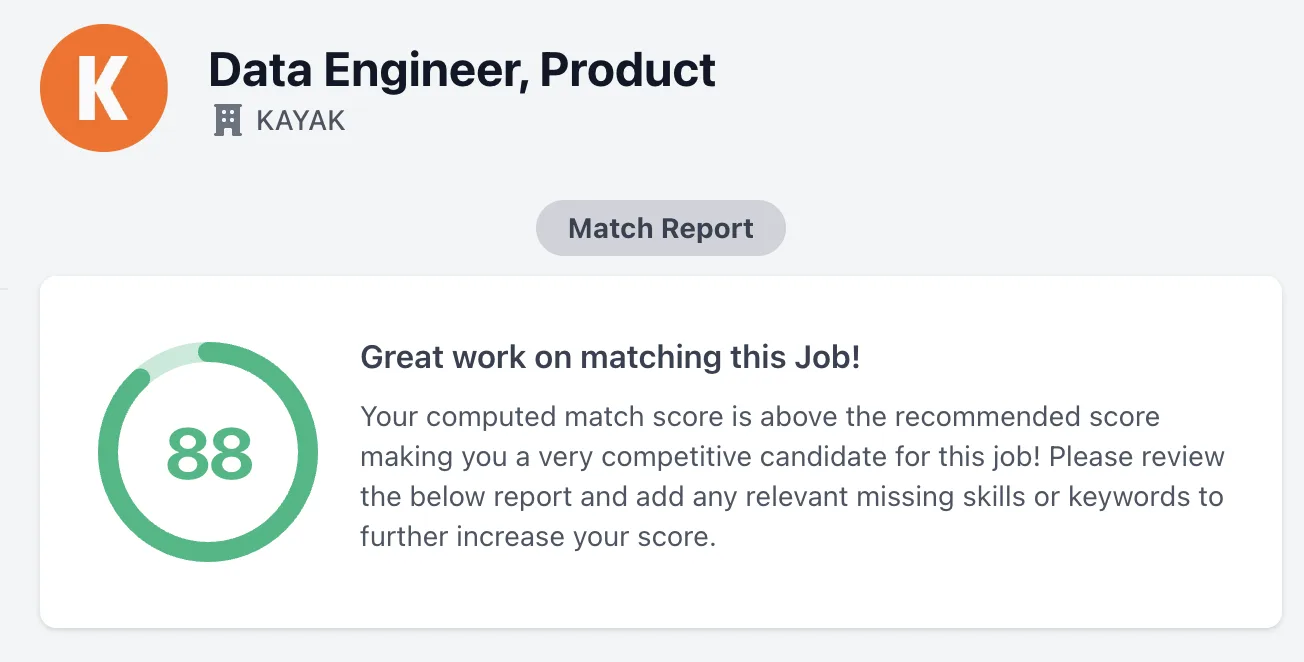
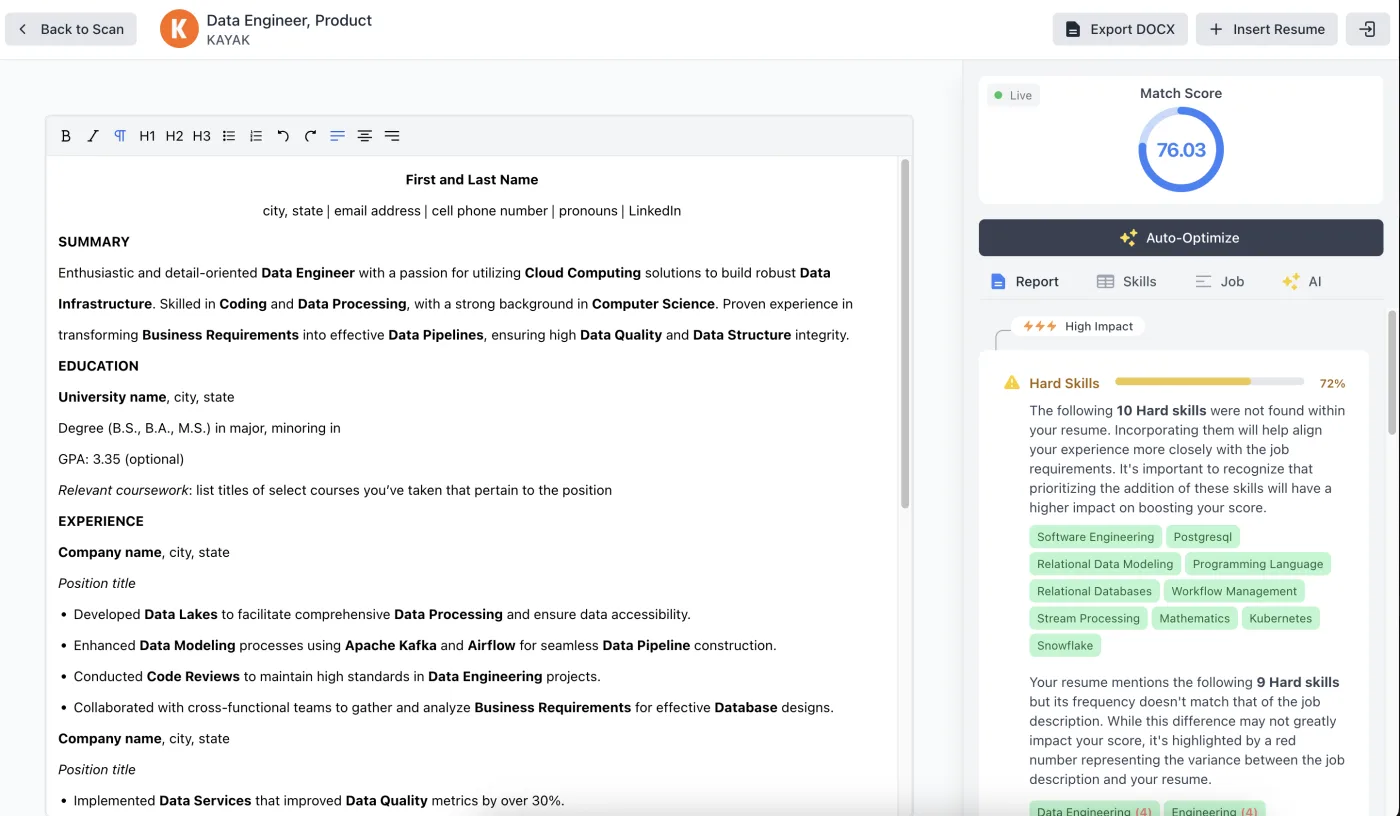
Nursing is one of the most in-demand professions in the country, yet many qualified nurses struggle to get past healthcare Applicant Tracking Systems. The reason is straightforward: hospital systems and staffing agencies use ATS software that scans for very specific clinical terminology, certifications, and EHR platform names. If your resume does not match the exact language in the job posting, it gets filtered out before a nurse recruiter ever sees it. A free ATS check will tell you whether the parser is reading your credentials and certifications at all, and what a resume score measures explains the number you get back.
The challenge is that nursing requirements vary dramatically by specialty. An ICU nurse needs different certifications and keywords than a labor and delivery nurse or a nurse practitioner. A med-surg resume will look nothing like an OR resume. On top of that, healthcare employers want to see specific EHR systems by name, exact patient-to-nurse ratios, and quantifiable outcomes. A generic nursing resume simply will not cut it.
This guide walks you through how to write a nursing resume that speaks the language of healthcare hiring managers. You will learn how to craft a strong headline and summary, which certifications to highlight for your specialty, and which common mistakes cost nurses interviews every day.
Write a Resume Headline That Gets Noticed
Your resume headline is the very first line a nurse recruiter reads. In healthcare hiring, recruiters often review hundreds of applications per open position. A strong headline immediately communicates your licensure, specialty area, key certifications, and years of experience. A weak headline forces the recruiter to dig through your entire resume to figure out what kind of nurse you are and whether you are qualified.
The best nursing headlines are front-loaded with the information that matters most: your credential (RN, LPN, NP), your unit or specialty, your most relevant certifications, and a quick indicator of experience level. This is also the first thing an ATS scans, so matching the job title language exactly is critical.
STRONG EXAMPLE
"Registered Nurse, ICU | BLS, ACLS, PALS Certified | 6+ Years Level I Trauma"
WEAK EXAMPLE
"Experienced Nurse Looking for New Opportunities"
The strong example packs credential, specialty, certifications, and experience into a single scannable line. The weak example could describe any nurse at any level and does not contain a single keyword an ATS would match against. Notice how the strong example also specifies "Level I Trauma," which tells the recruiter the acuity level you are comfortable with. These details matter enormously in healthcare hiring.
Write a Clinical Summary That Sells Your Experience
Your professional summary should give a nurse recruiter everything they need in three to four sentences: your specialty, your years of hands-on clinical experience, the types of patients you have cared for, the EHR systems you know, and at least one measurable achievement. Healthcare hiring managers want specifics. Vague summaries that could apply to any nurse do not make it past the first screen.
STRONG EXAMPLE
"BSN-prepared Registered Nurse with 6 years of ICU experience in a 450-bed Level I Trauma Center. Proficient in Epic EHR, hemodynamic monitoring, ventilator management, and rapid response protocols. Maintained a 1:2 patient ratio in a 24-bed surgical ICU. Reduced CLABSI rates by 30% through evidence-based practice initiatives. BLS, ACLS, PALS, and CCRN certified."
WEAK EXAMPLE
"Compassionate and hardworking nurse with several years of experience. Strong communicator who works well in a team. Looking for a position where I can make a difference in patient care."
The strong example names the facility type, the EHR system, specific clinical competencies, a concrete patient ratio, a measurable outcome, and all relevant certifications. The weak example contains no clinical keywords, no certifications, no metrics, and no specifics that an ATS could match. Words like "compassionate" and "hardworking" are filler that every applicant uses and no ATS filters for.
See How Your Nursing Resume Scores
Upload your resume and a healthcare job posting to instantly see which keywords from the posting are missing from your resume.
Scan My Resume
Certifications That Matter by Nursing Specialty
Certifications are one of the most heavily weighted keywords in healthcare ATS systems. Many hospital job postings list specific certifications as required or preferred qualifications, and the ATS is programmed to scan for them. The certifications that matter depend entirely on your nursing specialty. Listing irrelevant certifications wastes space, while omitting the ones your target employer expects will cost you the interview.
The table below breaks down the most important certifications to highlight by specialty. If you hold any of these and they appear in your target job description, they should be prominently featured in both your headline and your dedicated certifications section.
| Specialty |
Key Certifications to Include |
| RN / ICU |
BLS, ACLS, PALS, CCRN, TNCC |
| Emergency / ER |
CEN, ACLS, PALS, TNCC, ENPC |
| OR / Surgical |
CNOR, BLS, ACLS |
| Labor & Delivery |
RNC-OB, NRP, BLS, ACLS, C-EFM |
| Pediatric |
CPEN, PALS, CPN |
| LPN / LVN |
IV Certification, BLS, Wound Care Certification |
| Nurse Practitioner |
ANCC or AANP Board Certification, DEA Registration, State Prescriptive Authority |
| CNA |
State CNA Certification, BLS/CPR |
When listing certifications on your resume, always include the certification number and expiration date. Healthcare employers verify these credentials, and an ATS may flag incomplete entries. For example, write "ACLS Certified, American Heart Association, Exp. 06/2027" rather than just "ACLS." This level of detail shows recruiters you are current and saves them a verification step, which speeds up your candidacy.
TIP
Scan your resume against each job posting with SkillSyncer to see which certifications the employer specifically mentions. Some facilities require ACLS for med-surg roles while others only require it for critical care. Matching the exact posting prevents you from over-listing or missing a required cert.
Match Your Certifications to Job Requirements
SkillSyncer compares your resume against the job description and shows you which keywords and terms from the posting are missing from your resume.
Try It Free
Key Skills to Include on a Nursing Resume
Healthcare ATS systems scan for both hard clinical skills and soft skills that indicate you can function effectively on a care team. The keywords below are among the most commonly searched terms in nursing job postings. Include the ones that honestly reflect your experience and that appear in your target job description.
Patient Assessment
Electronic Health Records
Medication Administration
Vital Signs Monitoring
IV Therapy
Wound Care
Patient Education
Care Planning
HIPAA Compliance
Infection Control
BLS / ACLS / PALS
Telemetry
Triage
EMR / EHR Systems
Clinical Documentation
Team Collaboration
Do not paste this entire list into your resume. Every job posting prioritizes different skills. An ER position will weight triage and trauma assessment far more heavily than wound care. A home health role will emphasize patient education and care planning over telemetry. Use SkillSyncer to compare your resume against each specific job posting and see exactly which skills that employer is filtering for.
Common Mistakes on Nursing Resumes
1. Not specifying EHR systems by name. Writing "proficient in electronic health records" tells an ATS nothing. Healthcare employers want to see the exact platform: Epic, Cerner, Meditech, CPSI, or Allscripts. If the job posting says "Epic experience required" and your resume only says "EHR proficient," the ATS will not make the connection. Always name the specific systems you have used, and list every EHR platform you have hands-on experience with.
2. Listing outdated or expired certifications. An expired ACLS certification does not help your resume. It actually hurts it because it signals to the recruiter that you have not maintained your credentials. Only list certifications that are current, and always include the expiration date. If a required certification has lapsed, renew it before you apply. Healthcare employers verify certifications, and listing expired ones can disqualify you immediately.
3. Using vague patient ratios or no ratios at all. Patient-to-nurse ratios tell a hiring manager more about your experience level than almost any other detail. "Managed patient care in a busy hospital" says nothing. "Provided direct care for 5-6 patients per shift on a 36-bed medical-surgical unit" immediately communicates your workload capacity and setting. Always include your typical patient ratio, the unit size, and the facility type (teaching hospital, community hospital, long-term care, etc.).
4. Ignoring specialty-specific keywords. A nurse applying for an ICU role needs to mention hemodynamic monitoring, ventilator management, arterial lines, and central lines. A nurse applying for L&D needs to mention fetal monitoring, labor augmentation, and neonatal resuscitation. Using generic nursing language instead of specialty-specific terminology means the ATS will rank your resume lower than candidates who used the exact clinical terms from the job posting. Scan every job description carefully and mirror its clinical language in your resume.